KEY TAKEAWAYS
- Compare one changed variable at a time.
- Use the same stone, machine, operator method and starting surface.
- Record rework and scratch removal—not final gloss alone.
- Keep the approved sample and written result as the order reference.
1. Define what a passing sample means
A sample cannot pass merely because it looks acceptable once. Before testing, write down the commercial result the buyer needs: scratch removal, finish clarity, cycle, edge geometry, color-transfer boundary, wear or a combination of these.
If two teams use different definitions of 'high gloss' or 'same quality,' the comparison is already unstable. Use a visual reference, instrument reading where appropriate, and an agreed tolerance for rework.
- Target material and finish
- Maximum acceptable rework
- Sequence and pad-change expectation
- Identity and packaging checks
- Evidence required before shipment
2. Hold the test variables constant
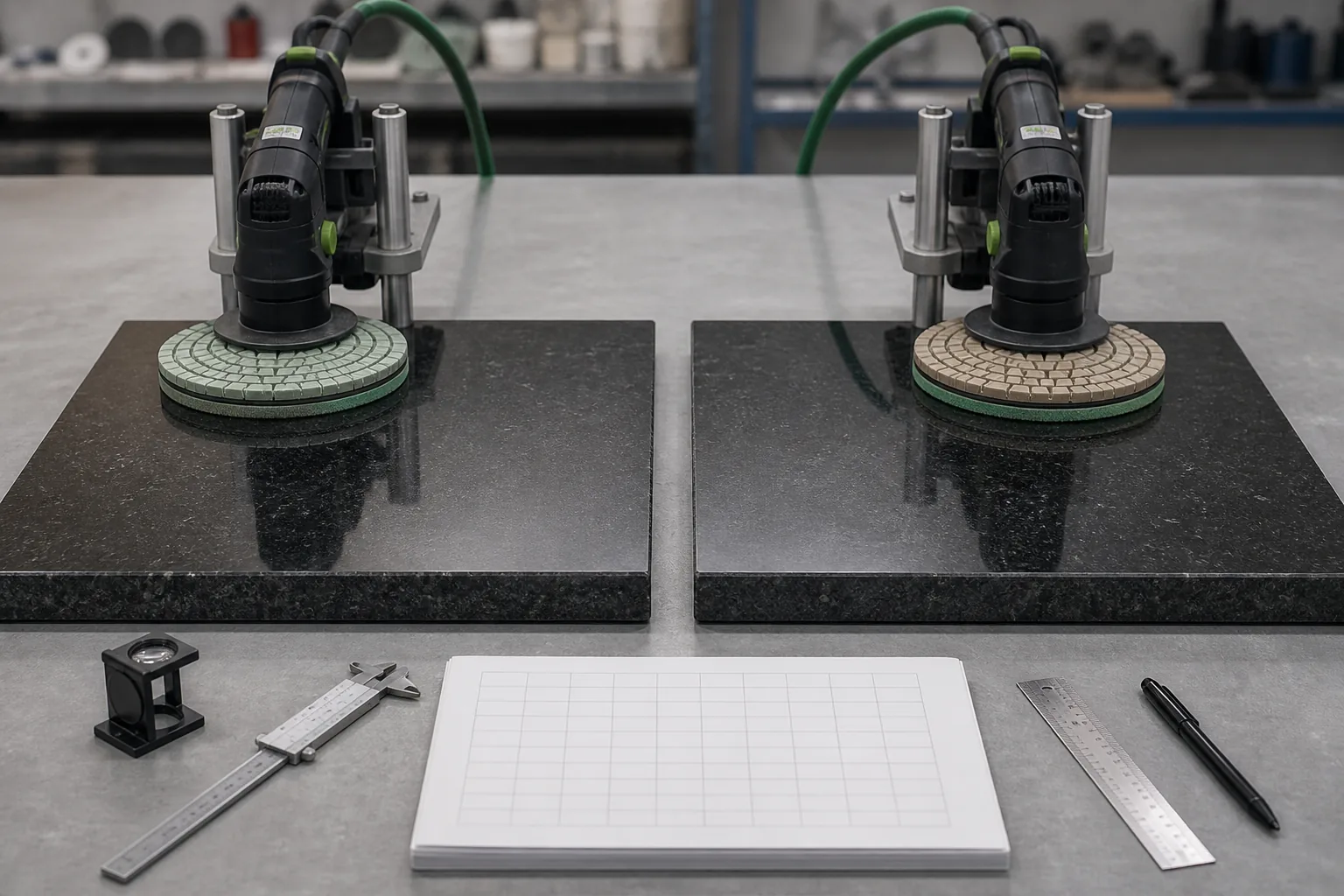
A fair A/B trial changes the sample pad while holding the operating conditions as steady as practical. Record the variables instead of relying on memory.
| Variable | What to record | Why it matters |
|---|---|---|
| Material | Stone name, color, lot and test area | Different slabs can polish differently. |
| Starting surface | Previous grit, saw mark or preparation step | The first pad must receive the same scratch. |
| Machine | Polisher, backer or floor holder | Fit, flexibility and power change contact. |
| Operating method | Speed setting, water, pressure, passes and time | Technique can hide or exaggerate product differences. |
| Inspection | Cleaning, dry-down time, light and viewing angle | Residual slurry or water can disguise scratches. |
3. Inspect every transition, not only the last pad
A final surface can look bright while retaining an earlier scratch pattern. Clean and inspect after each position. Note whether the next pad removes the previous scratch without excessive passes or pressure.
For reduced-step systems, this transition check is especially useful because each position is expected to cover a wider portion of the process.
4. Use a buyer scorecard
A simple scorecard makes purchasing and factory discussions more precise. Weight the factors according to the buyer's market instead of declaring one pad universally better.
| Criterion | Suggested evidence | Decision question |
|---|---|---|
| Cut and scratch removal | Photos after each position | Did the pad complete its assigned transition? |
| Finish | Dry visual inspection and agreed reading | Is clarity acceptable on the target material? |
| Cycle | Passes, time and pad changes | Does the workflow suit the buyer's customer? |
| Wear | Pad condition and work completed | Is wear stable enough for a larger trial? |
| Usability | Heat, vibration, flexibility and color transfer | Can the operator repeat the result safely? |
5. Turn the result into an order reference
When a sample is accepted, link the physical sample to a written specification: construction, sequence, color, backing, artwork, packaging and the agreed test method. Photograph the reference and assign an approval date or code.
The repeat order should be compared with that agreed reference—not with an undefined memory of the first trial.
Safety note for stone testing
Testing does not replace the buyer's workplace risk assessment. Follow the actual tool and pad instructions. Where stone work can generate respirable crystalline silica, use the engineering controls, wet methods, extraction and other measures required for the task and jurisdiction.
BUYER FAQ
Questions related to this guide
Should both samples be tested on the same slab?+
When practical, use comparable areas of the same slab or lot and document the starting surface. That removes one major source of variation.
Is gloss enough to approve a pad?+
Usually not. Scratch removal, clarity, cycle, wear, heat, color transfer and repeatability may all affect the commercial result.
How many pieces should be tested?+
There is no universal number. Use enough material and repetitions to expose normal variation before fixing a volume-order reference.
What should be sent back to the factory?+
Send the scorecard, photos, machine and stone details, operating method, failed conditions and the change requested for the next sample.
REFERENCES & EXTERNAL CONTEXT
External sources document the referenced directory, product or safety context. They do not certify GREAT products or imply a listing, event, distributor or other affiliation.